

Introduction
The increasing prevalence and high mortality of lung cancer is still one of the most significant challenges to global health [1]. The World Health Organization (WHO) estimates that more than 2 million new cases of lung cancer are diagnosed annually, with approximately 1.8 million deaths from lung cancer each year, accounting for nearly 18% of all cancer deaths [2]. Advances in early diagnosis, imaging, targeted therapy, and immunotherapy have had little impact on the overall 5-year survival rate for lung cancer, which remains alarmingly low [3]. The main factors contributing to this scenario are late diagnosis, high cancer aggressiveness, and the complex and diverse biological behavior of the disease [4]. Therefore, it is crucial to understand the individual factors influencing disease progression and prognosis for the purposes of diagnosis, risk assessment, and subsequent selection of treatment strategies [5].
Body mass index (BMI) is a common anthropometric clinical marker of nutritional deficiency [6]. It is measured by the formula: weight in kilograms divided by the square of the height in meters (kg/m²) [6]. Underweight and overweight or obesity are BMI categories that have been shown to either increase or decrease the risk of lung cancer, its biology, and associated clinical outcomes [7]. Epidemiological studies have shown an inverse association between BMI and lung cancer among smokers with more advanced disease, as well as a disproportionately high risk of adverse outcomes among those with a lower BMI [8]. This association has been attributed to impaired immune surveillance, increased systemic inflammation, and cancer cachexia [9]. On the other hand, in the case of non-small cell lung cancer (NSCLC), breast cancer, and lung adenocarcinoma, some studies describe the so-called obesity paradox, which demonstrates increased survival in overweight patients vs. normal or underweight patients [10]. This paradox is due to increased physiological reserves, altered chemotherapy pharmacokinetics with preserved inflammatory responses, and weakened primary defenses [11].
Smoking is the primary etiologic factor in lung cancer, accounting for nearly 90% of cases worldwide. In addition to its carcinogenic role, smoking induces chronic systemic inflammation, metabolic dysregulation, and oxidative stress, which contribute to progressive weight loss and the development of cancer-associated cachexia. These mechanisms may partially explain the strong association between smoking and decreased BMI observed in lung cancer patients [6, 12].
Of these, the most concerning is the association between BMI and smoking, which tends to lower BMI, thereby increasing the risk of malnutrition and ultimately contributing to a shortened lifespan [6, 13]. Lung cancer has four histological subtypes of cancer: adenocarcinoma, squamous cell lung cancer, small cell lung cancer (SCLC), and large cell carcinoma [14]. Each lung cancer subtype varies in its characteristics and biological properties. This is caused partially by differences in the cancer subtypes presented by patients, as well as in BMI, cachexia, inflammation, and metabolic dysfunction [8]. For example, patients with small cell and squamous cell lung cancer tend to experience rapid weight loss, compared with patients with lung adenocarcinoma [15].
Despite understanding of these individual elements, there are very few studies examining the combined effects of BMI, smoking, gender, cancer subtype, and cancer stage within the same study population [16]. Advancing understanding of the important interactions among all of these factors could significantly improve patient prognosis and develop personalized support strategies, such as nutritional optimization, weight management, and intensification therapy [17, 18].
This study examines multiple relationships between BMI and associated factors, such as gender, age, and smoking, in a population of 400 lung cancer patients. We further explore the potential impact of smoking and histological type of cancer on BMI. The goal of this study was to develop a nutrition-based lung cancer therapy model for prognosis, assessment, and treatment planning based on an understanding of these critical, clinically relevant relationships.
Material and Methods
Study setting
This cross-sectional study was conducted at Tishreen University Hospital, Lattakia, Syria, from January through December 2023.
Study design and participants
The study included 400 adult patients (≥18 years of age) with histologically confirmed primary lung cancer. Patients met inclusion criteria if they had a complete physical examination and a documented active diagnosis of lung cancer in their medical records. Exclusion criteria included a history of other malignancies, severe comorbidities affecting nutritional status, incomplete clinical information, or missing anthropometric data.
Study variables
· Demographic data: age, gender;
· Smoking status: smokers vs. nonsmokers;
· Anthropometric data: height and weight were measured at admission using a calibrated stadiometer and digital scale. BMI was calculated as weight (kg)/height (m²) and classified according to WHO categories: moderate thinness (16.0-16.99), mild thinness (17.0-18.49), normal weight (18.5-24.9), overweight (25.0-29.9), and Class I obesity (30.0-34.9);
· Cancer histology: classified into SCLC and NSCLC, including adenocarcinoma, squamous cell lung cancer, and large cell carcinoma;
Cancer stage: determined according to the TNM classification (stages I-IV).
Statistical analysis
Continuous variables were expressed as mean ± standard deviation (SD), and categorical variables as frequencies and percentages. Independent t-test was employed to compare mean BMI values by gender and smoking groups. Chi-squared test was used for BMI categories. One-way analysis of variance (ANOVA) with Holm-Bonferroni correction was applied when comparing BMI by cancer type and stage. Two-way ANOVA tested the independent and combined effects of smoking and cancer type on BMI. Multivariate linear regression was employed to identify independent predictors of BMI after adjusting for age and gender. Patients with Stage I disease (n=2) were excluded from the ANOVA analysis due to insufficient sample size, which precludes reliable variance estimation or meaningful statistical comparisons. A p-value less than 0.05 was considered statistically significant. All analyses were performed using SPSS version 26.0 (IBM Corp., Armonk, NY, USA).
Results
Demographics and baseline characteristics
The demographic, clinical, and lifestyle characteristics of the 400 lung cancer patients included in this study are summarized in Table 1.
Table 1. Baseline characteristics of the study population
|
Variable |
N |
% |
|
Gender: |
||
|
Male |
300 |
75% |
|
Female |
100 |
25% |
|
Cancer type: |
||
|
Adenocarcinoma |
147 |
36.75% |
|
Large cell carcinoma |
28 |
7% |
|
Small cell lung cancer |
120 |
30% |
|
Squamous cell lung cancer |
105 |
26.25% |
|
Smoking: |
||
|
Smoker |
317 |
79.25% |
|
Nonsmoker |
83 |
20.75% |
|
BMI category: |
||
|
Mild thinness |
196 |
49% |
|
Moderate thinness |
54 |
13.5% |
|
Normal weight |
95 |
23.75% |
|
Overweight |
37 |
9.25% |
|
Class I obesity |
18 |
4.5% |
|
Cancer stage |
||
|
1 |
2 |
|
|
2 |
76 |
20.1% |
|
3 |
218 |
57.67% |
|
4 |
82 |
21.69% |
BMI and smoking
The distribution of BMI categories among smokers and nonsmokers is presented in Table 2, highlighting the higher prevalence of underweight and thinness among smokers vs. nonsmokers.
Table 2. Distribution of BMI categories by smoking status
|
BMI Category |
Smokers N (%) |
Nonsmokers N (%) |
|
Mild thinness |
184 (93.88%) |
12 (6.12%) |
|
Moderate thinness |
52 (96.3%) |
2 (3.7%) |
|
Normal weight |
52 (55.92%) |
41 (44.08%) |
|
Overweight |
20 (51.28%) |
19 (48.72%) |
|
Class I obesity |
9 (50%) |
9 (50%) |
BMI and gender
Table 3 shows the distribution of BMI categories among men and women with lung cancer, demonstrating that underweight and thinness were more common among men, while women were more likely to fall into the normal and elevated BMI categories.
Table 3. Distribution of BMI categories by gender
|
BMI Category |
Male N (%) |
Female N (%) |
|
Mild thinness |
172 (87.75%) |
24 (12.25%) |
|
Moderate thinness |
51 (94.44%) |
3 (5.55%) |
|
Normal weight |
49 (52.7%) |
44 (47.3%) |
|
Overweight |
19 (48.7%) |
20 (51.3%) |
|
Class I obesity |
9 (50%) |
9 (50%) |
Cancer type and BMI
Table 4 presents the mean BMI and standard deviation for each histological subtype of lung cancer, indicating that patients with large cell carcinoma had the highest mean BMI, while patients with SCLC had the lowest mean BMI.
The distribution of BMI categories varied by cancer type, with thinness being highest in SCLC and squamous cell lung cancer.
Table 4. Mean BMI by histological subtype of lung cancer
|
Cancer type |
Mean BMI ± SD |
|
Adenocarcinoma |
20.73±4.29 |
|
Large cell carcinoma |
22.74±50 |
|
Small cell lung cancer |
19.12±3.56 |
|
Squamous cell lung cancer |
19.5±4.56 |
Cancer stage and BMI
Patients with Stage I lung cancer were not included in the comparative analysis because only two patients were classified as such, thus making statistical comparisons impractical. Table 5 shows the mean BMI and standard deviation by lung cancer stage, demonstrating a progressive decrease in BMI with increasing disease stage.
Table 5. Mean BMI by lung cancer stage
|
Cancer stage |
Mean BMI ± SD |
|
|
2 |
23.07±4.35 |
|
|
3 |
19.56±3.96 |
|
|
4 |
17.44±1.46 |
|
BMI decreased significantly with increasing disease stage, consistent with cancer cachexia.
Multivariate linear regression analysis revealed that smoking, advanced disease stage (III-IV), and histological type of SCLC were independently associated with lower BMI. Increasing age was associated with a moderate but statistically significant increase in BMI, while gender was not an independent predictor after adjustment (Table 6).
Table 6. Multivariable linear regression analysis predicting BMI
|
Variable |
β |
95% CI |
p-value |
|
Smoking (smoker vs. nonsmoker) |
-3.50 |
-5.45 to -1.55 |
<0.001 |
|
Male gender (male vs. female) |
-0.07 |
-1.88 to 1.74 |
0.94 |
|
Advanced stage (III-IV vs. I-II) |
-2.95 |
-3.87 to -2.03 |
<0.001 |
|
SCLC histology (vs. NSCLC) |
-1.34 |
-2.11 to -0.57 |
0.001 |
|
Age (years) |
+0.05 |
0.01 to 0.08 |
0.016 |
Interaction between smoking and cancer type
The Figure 1 below illustrates the mean BMI for different histological subtypes of lung cancer depending on smoking status. A two-way ANOVA revealed that both smoking (p<0.0001) and cancer type (p<0.001) independently affected BMI. The interaction (Smoking × Cancer type) was not statistically significant (p=0.116), implying that the effect of smoking on BMI was similar across all histological subtypes.
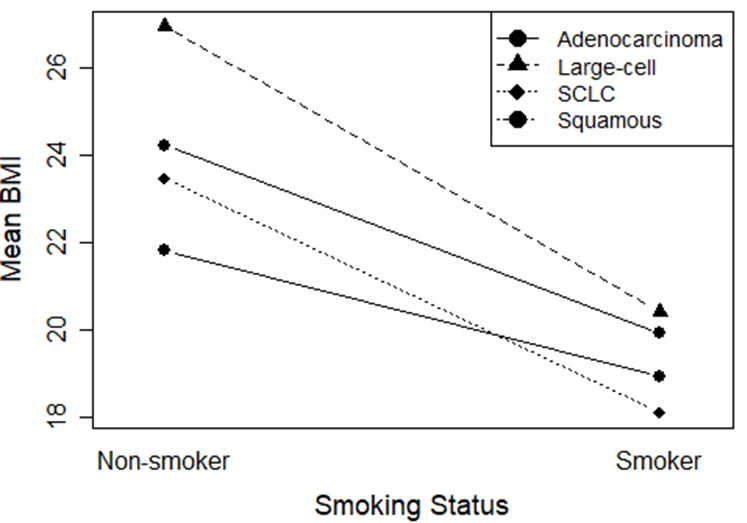
Figure 1. Interaction between smoking status and lung cancer histology depending on mean BMI.
Discussion
Our study revealed a strong correlation between lower BMI and the following clinical factors: smoking, male gender, more aggressive histological subtypes such as small cell lung cancer, and advanced-stage disease [16]. These findings further complement the existing publications and provide new clinical insights that can be applied in both the prognostic assessment and clinical management of patients with lung cancer [19]. Several reports indicate that BMI is lower in smokers than in nonsmokers, emphasizing the association of lifestyle factors with nutritional status in cancer patients [19]. This is also supported by the findings of Jin et al. (2023), who showed that male gender, underweight, and pretreatment weight loss negatively impact the efficacy of immune checkpoint inhibitors in patients with NSCLC [20]. It is also well known that smoking can decrease appetite, increase basal metabolic rate, and induce systemic inflammation, which may be associated with weight loss. Furthermore, as noted by Tseng et al. (2022), weight loss was observed before lung cancer diagnosis, especially at later stages, indicating clinical differences between smokers and nonsmokers with SCLC. These observations suggest that monitoring BMI in high-risk groups, particularly among smokers, may serve as an early warning of disease progression or the presence of aggressive pathology [21].
In our study, we observed a lower body mass index (BMI) in men than in women, which is consistent with previous studies [22]. This difference may be due to several biological and hormonal factors. For example, Georgakopoulou et al. (2024) examined the role of gender, smoking, and ethnicity in the association between BMI and overall survival in NSCLC and how they influence the prognostic role of BMI in cancer outcomes. Furthermore, biological differences between women and men may also result in variations in fat distribution and hormone levels, which may influence metabolic rate and, consequently, BMI [23]. These findings highlight the importance of considering gender-based differences when interpreting BMI as a prognostic marker and planning individualized treatment for patients [24].
The association between lower BMI and aggressive histological subtypes, such as SCLC and squamous cell lung cancer, may be explained by various biological and metabolic mechanisms rather than tumor aggressiveness alone. SCLC is often associated with pronounced systemic inflammation and paraneoplastic neurological syndromes that contribute to increased energy expenditure and metabolic dysregulation. Elevated levels of proinflammatory cytokines, including interleukin 6 (IL-6) and tumor necrosis factor alpha (TNF-α), are implicated in the pathogenesis of cancer cachexia, promoting muscle proteolysis, lipolysis, and anorexia [24].
Similarly, squamous cell lung cancer is associated with a higher inflammatory burden and chronic tissue damage caused by smoking, which may exacerbate systemic catabolic states. These processes lead to hypermetabolism, loss of skeletal muscle mass, and adipose tissue depletion, ultimately manifesting as a decrease in BMI. Collectively, these data suggest that tumor-specific inflammatory and paraneoplastic pathways play a critical role in shaping the nutritional status of patients with lung cancer and may partially explain the pronounced decrease in BMI observed in these histological subtypes [25, 26].
In our study, a continuous decrease in BMI was observed with disease progression, reflecting cachexia and generalized inflammation. This is consistent with the findings of Kwon et al. (2023), who analyzed the prognostic value of BMI SCLC and whether skeletal muscle has prognostic significance, highlighting how body composition influences cancer outcomes [27]. These data suggest that weight loss and muscle atrophy are not only markers of disease severity but may also actively contribute to poor outcomes, supporting the potential benefit of early nutritional support [28]. Outcomes may be improved through targeted interventions that address weight loss and muscle atrophy in later stages of cancer, potentially improving treatment tolerability and overall survival [29].
Although our cohort predominantly had a low BMI (particularly among smokers, patients with advanced-stage disease, and aggressive histological subtypes), the concept of the obesity paradox highlights the complex and nonlinear relationship between obesity and cancer outcomes. While several studies suggested a survival advantage for overweight or obese patients with certain lung cancer subtypes or treatment modalities, these findings do not contradict our data but rather highlight the heterogeneity of the impact of body composition on cancer. In this context, low BMI in our population likely reflects active catabolic processes and cancer cachexia, whereas the obesity paradox may be due to preserved metabolic reserves, treatment-related factors, and patient selection. These observations highlight the need for individualized nutritional assessment that goes beyond BMI alone [10, 30].
This study accentuates the potential value of BMI as a clinical marker in lung cancer. Although low BMI is associated with worse outcomes, the relationship between BMI and cancer prognosis is multifaceted and depends on several factors, including histological subtype, disease stage, and treatment approaches. Incorporating BMI assessment into routine clinical evaluation, along with other relevant factors such as smoking status and tumor biology, may aid in risk stratification and support early interventions [10]. Further well-designed observational and prospective studies are needed to clarify the relationship of BMI with lung cancer prognosis and to develop targeted strategies to improve patient outcomes, including nutritional interventions, pharmacological treatment, and supportive care.
Key findings
· Smoking was strongly associated with lower BMI among lung cancer patients.
· Patients with SCLC and squamous cell lung cancer exhibited the lowest BMI values.
· BMI decreased significantly with cancer stage progression.
· Multivariate analysis confirmed that smoking, advanced stage of cancer, and SCLC histological type r were independent predictors of lower BMI.
Conclusion
This study demonstrates that lower BMI in lung cancer patients is significantly associated with smoking, advanced-stage cancer, and aggressive histological subtypes, particularly SCLC. Multivariate analysis confirmed that these factors are independent predictors of lower BMI, highlighting the influence of tumor biology and lifestyle factors on nutritional status. These results emphasize the importance of early assessment of nutritional status and targeted supportive therapy, particularly in high-risk patient groups. Further prospective studies are needed to examine the prognostic and therapeutic implications of BMI changes in lung cancer.
Clinical Implications
This study demonstrated that BMI is a simple, inexpensive, and rapid clinical marker for identifying lung cancer patients who are more likely to have an aggressive disease course or a worse prognosis. Regular monitoring of weight and BMI during treatment and at diagnosis can help clinicians identify patients at risk for developing cachexia and significant weight loss. Underweight patients should prioritize timely nutritional and supportive therapy to mitigate the effects of malnutrition and systemic inflammation, which can negatively impact treatment tolerance and outcomes. Furthermore, integrating BMI with other clinical variables, such as smoking status and histological subtype, allows for more individualized patient management, including nutritional support, weight gain strategies, pharmacological treatment, and adjuvant therapy.
Limitations of the study
This study has several limitations that should be considered when interpreting the results. The retrospective, cross-sectional design limits the ability to establish causal relationships between clinical factors and BMI. Furthermore, BMI is a crude measure of body composition that does not distinguish between fat and muscle mass, meaning that more detailed body composition measures could provide better prognostic and treatment-related information. The lack of survival or treatment outcome data over time also limits this study, as it precludes an assessment of the BMI impact on overall survival. Finally, selection bias may be present due to the hospital-based cohort, which may reduce the generalizability of the results to broader populations.
Smoking status was recorded as a binary variable (smoker vs. nonsmoker), which may obscure potential dose-response relationships between smoking intensity/duration and BMI. Future studies using quantitative measures of smoking, such as pack-years, may provide a more accurate assessment of the relationship between smoking and nutritional status in patients with lung cancer.
BMI was measured at hospitalization, which may not fully reflect weight changes prior to diagnosis or unintentional weight loss that occurred before lung cancer diagnosis.
Conflict of Interest
The authors declare no conflicts of interest related to this study.
Funding
This study did not receive any specific grants from funding agencies in the public, commercial, or not-for-profit sectors.
Acknowledgments
The authors would like to thank the clinical and laboratory staff for their valuable support in data collection and patient management. The authors also extend their sincere gratitude to Issa Yousef for his valuable assistance with the statistical analysis of the study. Their contributions were greatly appreciated and were instrumental in the successful completion of this research.
Ethical approval
All procedures performed in studies involving human participants complied with the ethical standards of the institutional research committee and with the 1964 Declaration of Helsinki and its later amendments or comparable ethical standards.
AI use statement
In preparing this manuscript, the authors used AI-enabled tools to support the literature search and improve the linguistic clarity and readability of the text. AI tools were not used to generate scientific content, analyze data, or formulate conclusions. All content was reviewed, edited, and approved by the authors, who take full responsibility for the accuracy, originality, and integrity of the manuscript.
- Li C, Lei S, Ding L, Xu Y, Wu X, Wang H, et al. Global burden and trends of lung cancer incidence and mortality. Chin Med J (Engl) 2023; 136(13): 1583-1590. https://doi.org/10.1097/cm9.0000000000002529.
- Bray F, Laversanne M, Sung H, Ferlay J, Siegel RL, Soerjomataram I, et al. Global cancer statistics 2022: GLOBOCAN estimates of incidence and mortality worldwide for 36 cancers in 185 countries. CA Cancer J Clin 2024; 74(3): 229-263. https://doi.org/10.3322/caac.21834.
- Li C, Wang H, Jiang Y, Fu W, Liu X, Zhong R, et al. Advances in lung cancer screening and early detection. Cancer Biol Med 2022; 19(5): 591-608. https://doi.org/10.20892/j.issn.2095-3941.2021.0690.
- Patel P, Flores R, Alpert N, Pyenson B, Taioli E. Effect of stage shift and immunotherapy treatment on lung cancer survival outcomes. Eur J Cardiothorac Surg 2023; 64(2): ezad203. https://doi.org/10.1093/ejcts/ezad203.
- Cheng TY, Cramb SM, Baade PD, Youlden DR, Nwogu C, Reid ME. The International Epidemiology of Lung Cancer: Latest Trends, Disparities, and Tumor Characteristics. J Thorac Oncol 2016; 11(10): 1653-1671. https://doi.org/10.1016/j.jtho.2016.05.021.
- Zhou W, Liu G, Hung RJ, Haycock PC, Aldrich MC, Andrew AS, et al. Causal relationships between body mass index, smoking and lung cancer: Univariable and multivariable Mendelian randomization. Int J Cancer 2021; 148(5): 1077-1086. https://doi.org/10.1002/ijc.33292.
- Kawai S, Lin Y, Tsuge H, Ito H, Matsuo K, Wada K, et al; Research Group for the Development and Evaluation of Cancer Prevention Strategies in Japan. Body mass index and lung cancer risk: Pooled analysis of 10 prospective cohort studies in Japan. Cancer Sci 2024; 115(4): 1346-1359. https://doi.org/10.1111/cas.16093.
- Vedire Y, Kalvapudi S, Yendamuri S. Obesity and lung cancer – A narrative review. J Thorac Dis 2023; 15(5): 2806-2823. https://doi.org/10.21037/jtd-22-1835.
- Zhang X, Liu Y, Shao H, Zheng X. Obesity Paradox in Lung Cancer Prognosis: Evolving Biological Insights and Clinical Implications. J Thorac Oncol 2017; 12(10): 1478-1488. https://doi.org/10.1016/j.jtho.2017.07.022.
- Lee JH, Kang D, Ahn JS, Guallar E, Cho J, Lee HY. Obesity paradox in patients with non-small cell lung cancer undergoing immune checkpoint inhibitor therapy. J Cachexia Sarcopenia Muscle 2023; 14(6): 2898-2907. https://doi.org/10.1002/jcsm.13367.
- Yao S, Zeng L, Wang F, Chen K. Obesity Paradox in Lung Diseases: What Explains It? Obes Facts 2023; 16(5): 411-426. https://doi.org/10.1159/000531792.
- Walser T, Cui X, Yanagawa J, Lee JM, Heinrich E, Lee G, et al. Smoking and lung cancer: the role of inflammation. Proc Am Thorac Soc 2008; 5(8): 811-815. https://doi.org/10.1513/pats.200809-100th.
- Al-Sawaf O, Weiss J, Skrzypski M, Lam JM, Karasaki T, Zambrana F, et al; TRACERx Consortium; Jamal-Hanjani M, Swanton C. Body composition and lung cancer-associated cachexia in TRACERx. Nat Med 2023; 29(4): 846-858. https://doi.org/10.1038/s41591-023-02232-8.
- Yang R, Cheung MC, Pedroso FE, Byrne MM, Koniaris LG, Zimmers TA. Obesity and weight loss at presentation of lung cancer are associated with opposite effects on survival. J Surg Res 2011; 170(1): e75-83. https://doi.org/10.1016/j.jss.2011.04.061.
- Troschel AS, Troschel FM, Best TD, Gaissert HA, Torriani M, Muniappan A, et al. Computed Tomography-based Body Composition Analysis and Its Role in Lung Cancer Care. J Thorac Imaging 2020; 35(2): 91-100. https://doi.org/10.1097/rti.0000000000000428.
- Jiang M, Fares AF, Shepshelovich D, Yang P, Christiani D, Zhang J, et al. The relationship between body-mass index and overall survival in non-small cell lung cancer by sex, smoking status, and race: A pooled analysis of 20,937 International lung Cancer consortium (ILCCO) patients. Lung Cancer 2021; 152: 58-65. https://doi.org/10.1016/j.lungcan.2020.11.029.
- Oswalt C, Liu Y, Pang H, Le-Rademacher J, Wang X, Crawford J. Associations between body mass index, weight loss and overall survival in patients with advanced lung cancer. J Cachexia Sarcopenia Muscle 2022; 13(6): 2650-2660. https://doi.org/10.1002/jcsm.13095.
- Park SY, Lee JG, Kim J, Bae MK, Lee CY, Kim DJ, et al. The influence of smoking intensity on the clinicopathologic features and survival of patients with surgically treated non-small cell lung cancer. Lung Cancer 2013; 81(3): 480-486. https://doi.org/10.1016/j.lungcan.2013.07.002.
- Gupta S, Hassan S, Bhatt VR, Abdul Sater H, Dilawari A. Lung cancer trends: smoking, obesity, and sex assessed in the Staten Island University's lung cancer patients. Int J Gen Med 2014; 7: 333-337. https://doi.org/10.2147/ijgm.s55806.
- Jin J, Visina J, Burns TF, Diergaarde B, Stabile LP. Male sex and pretreatment weight loss are associated with poor outcome in patients with advanced non-small cell lung cancer treated with immunotherapy: a retrospective study. Sci Rep 2023; 13(1): 17047. https://doi.org/10.1038/s41598-023-43866-5.
- Okamoto T, Suzuki Y, Fujishita T, Kitahara H, Shimamatsu S, Kohno M, et al. The prognostic impact of the amount of tobacco smoking in non-small cell lung cancer--differences between adenocarcinoma and squamous cell carcinoma. Lung Cancer 2014; 85(2): 125-130. https://doi.org/10.1016/j.lungcan.2014.06.006.
- Zhao J, Barta JA, McIntire R, Shusted C, Zeigler-Johnson C, Juon HS. Racial difference in BMI and lung cancer diagnosis: analysis of the National Lung Screening Trial. BMC Cancer 2022; 22(1): 797. https://doi.org/10.1186/s12885-022-09888-4.
- Nie W, Lu J, Qian J, Wang SY, Cheng L, Zheng L, et al. Obesity and survival in advanced non-small cell lung cancer patients treated with chemotherapy, immunotherapy, or chemoimmunotherapy: a multicenter cohort study. BMC Med 2024; 22(1): 463. https://doi.org/10.1186/s12916-024-03688-2.
- Georgakopoulou VE, Lempesis IG, Trakas N, Sklapani P, He Y, Spandidos DA. Lung cancer and obesity: A contentious relationship (Review). Oncol Rep 2024; 52(5): 158. https://doi.org/10.3892/or.2024.8817.
- Zhao G, Li X, Lei S, Zhao H, Zhang H, Li J. Prevalence of lung cancer in chronic obstructive pulmonary disease: A systematic review and meta-analysis. Front Oncol 2022; 12: 947981. https://doi.org/10.3389/fonc.2022.947981.
- Lyu Z, Si G, Xing M, Li W, Gao X, Wang M, et al. Circulating proteins associated with histological subtypes of lung cancer from genetic and population-based perspectives. PLoS Genet 2025; 21(8): e1011821. https://doi.org/10.1371/journal.pgen.1011821.
- Lee CH, Lin C, Wang CY, Huang TC, Wu YY, Chien WC, et al. Premorbid BMI as a prognostic factor in small-cell lung cancer-a single institute experience. Oncotarget 2018; 9(37): 24642-24652. https://doi.org/10.18632/oncotarget.24935.
- Minami S, Ihara S, Komuta K. Sarcopenia and Visceral Adiposity Are Not Independent Prognostic Markers for Extensive Disease of Small-Cell Lung Cancer: A Single-Centered Retrospective Cohort Study. World J Oncol 2020; 11(4): 139-149. https://doi.org/10.14740/wjon1289.
- Kwon YJ, Yoon YC, Kim HS, Cha MJ, Park S, Lee JH. Prognostic significance of body mass index in small-cell lung cancer: Exploring the relationship with skeletal muscle status. J Cachexia Sarcopenia Muscle 2023; 14(6): 2939-2947. https://doi.org/10.1002/jcsm.13345.
- Fang R, Yan L, Xu S, Xu Y, Gan T, Gong J, et al. Unraveling the obesity paradox in small cell lung cancer immunotherapy: unveiling prognostic insights through body composition analysis. Front Immunol 2024; 15: 1439877. https://doi.org/10.3389/fimmu.2024.1439877.
Received 18 October 2025, Revised 14 January 2026, Accepted 5 March 2026
© 2025, Russian Open Medical Journal
Correspondence to: Zein Al-Abideen Douba. E-mail: zeinalabideen.douba@latakia-univ.edu.sy.